The Personal Impact of Technology: A Scanner Story from 1980
A police scanner, a family emergency in 1980, and how early technology shaped the way I think about building useful things today.
On December 30, 1980, one of my older sisters, Kelly, was in a really bad car accident.
I was 13 years old at the time. I was already considered a geek, mostly because I used to carry a police scanner clipped to my waist. Below is a photo of me holding that scanner.
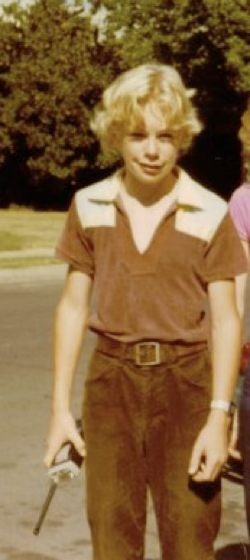
That handheld scanner had four channels. It would scan each one, stop when there was audio, play the transmission, then keep scanning during the silence.
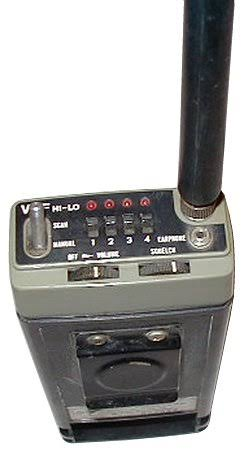
Picking those four channels was more of a commitment than it is today. Modern scanners are programmable. Back then, you purchased individual crystals, each tuned to the frequency you wanted, and inserted them into the scanner. Fortunately, RadioShack kept them in stock. For me, getting one was just a three-mile walk.
My four channels were:
- Police, main dispatch
- Fire
- Police, secondary dispatch, which I think was called “channel green”
- Piner’s Ambulance, a local ambulance company in Napa
That fourth channel meant something different from all the others. My mom worked at Piner’s Ambulance as a dispatcher. When I listened to that channel, I could sometimes hear my mom’s voice.
On the day of the accident, I was with my mom at J&P Market in Napa. She was inside paying for groceries. I had walked outside with my scanner, because of course I had, and I heard this on the Piner’s Ambulance channel:
Call Kathy. Her daughter has been in an accident.
I ran back into the store and told my mom what I had heard. We jumped in the car and headed home to get more details.
Thankfully, my sister survived.
I still think about the odds of that moment. I had to be carrying the scanner. It had to be on. It had to be tuned to that channel. I had to be outside where I could hear it clearly. And the message had to come across during that small window of time.
We did not have cell phones. We did not have computers in our pockets. We did not have text messages, push notifications, location sharing, or even pagers in our family. The best technology most homes had was the phone system slowly moving from pulse dialing to touch-tone.
But that little scanner changed what my family knew, and when we knew it.
The strange comfort of old signals
A few years ago, I bought another police scanner. It had been a long time since I had listened to one.
What surprised me was that I could fall asleep with it on, with police and fire calls quietly playing in the background. I had never realized that I found the sound comforting. Other people around me heard each call and became concerned. I heard background noise.
That scanner was never my whole life. But it was one of the first pieces of technology that truly impacted my life in a personal way. It connected me to the world around me. It connected me to my mom’s work. And on one specific day, it connected us to news we needed to hear.
That is still how I think about technology.
It is one thing to build it. It is another thing to experience it. And it is even more important to see how it affects someone else.
The part that still matters
I am always pleasantly surprised by how people use technology.
As builders, we spend a lot of time in meetings. We debate features. We write specs. We make roadmaps. We estimate, prioritize, revise, and launch.
But the best part is hearing what something actually meant to someone.
Sometimes a feature saves time. Sometimes it removes friction. Sometimes it makes a person feel more confident, more connected, or more in control. Sometimes it becomes part of their background noise in a way you never expected.
That feedback is what makes building the next thing exciting. Not just because the feature worked, but because it mattered enough for someone to notice.
The scanner was simple technology. Four channels. Four crystals. A speaker. A battery. But in the right moment, it became something much bigger than the hardware.
That is the part I still love about building: you never fully know how something will fit into someone’s life until it gets there.
Today, AI coding assistants make that loop even tighter. The distance from idea to implementation is shorter. I can prototype faster, release faster, and get real feedback sooner. That does not remove the need to think carefully about what should be built. It just means the time between curiosity and a working version is much smaller.
So I keep building, releasing, listening, and adjusting.
Because the next feature, tool, or little experiment might become more useful than I expected. And with the tools we have now, getting to that moment is faster than ever.